Guide
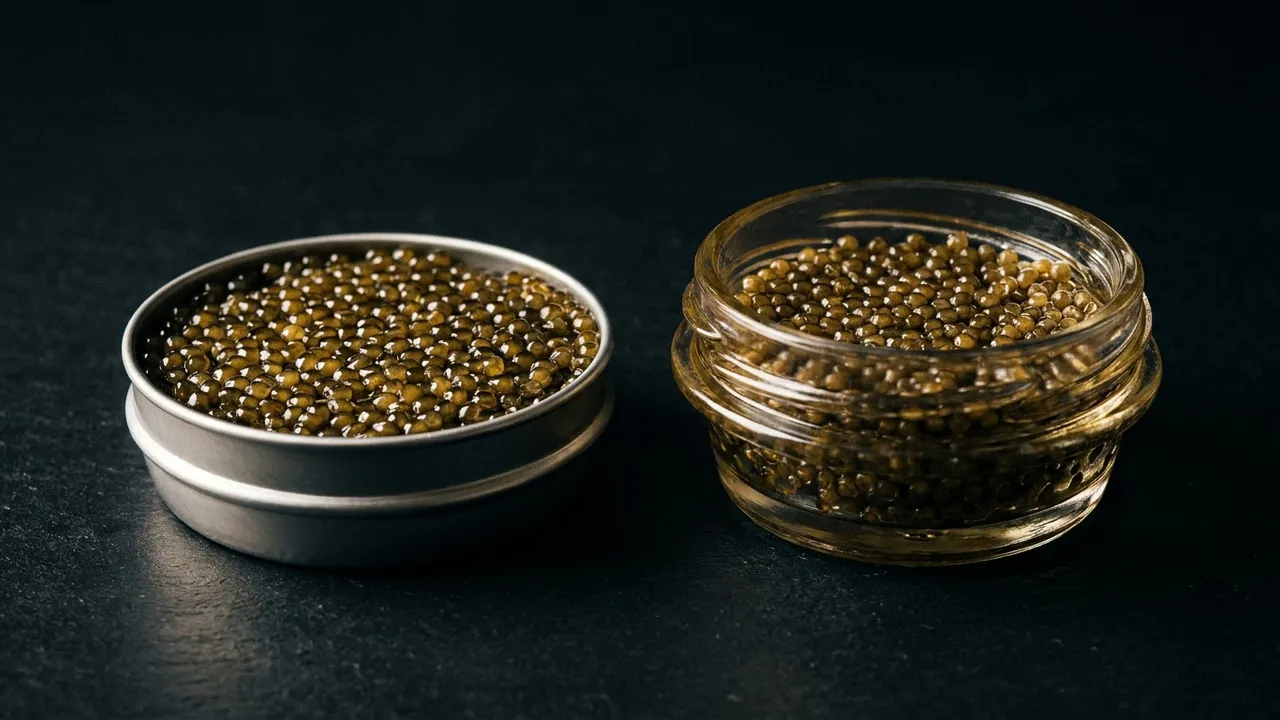
Pasteurized vs Fresh Caviar: What Actually Changes
Pasteurized caviar is cured roe that has been heat-treated in its sealed jar. The heat extends unopened shelf life from weeks to months and firms the pearls slightly, muting the flavour. Fresh caviar is not heat-treated at all. The trade is texture and nuance against shelf life and shipping robustness, and the price difference is far smaller than most buyers expect.
Reviewed by Awers Inc. — 6 August 2026. Awers Inc. has cured and packed its own caviar in Bellevue, Washington since 1995.
What is pasteurized caviar?
Pasteurized caviar is sturgeon roe that has been salted, packed into a sealed glass jar, then held at a controlled temperature. The heat kills the organisms that spoil it. The process happens after curing, with the jar closed, so nothing is added and nothing escapes.
Pasteurized caviar is real caviar. It is the same roe from the same fish, cured the same way, with one additional step at the end. The distinction is a processing choice, not a grade and not a quality tier.
The heat is gentle by cooking standards. Caviar never reaches a temperature that would cook the egg. The pearls stay whole, and the product is still eaten cold and raw.
Is caviar pasteurized?
Some caviar is pasteurized and most premium caviar is not. Fresh malossol caviar in a tin is the default at the top of the market. Pasteurized jars sit alongside it as a deliberate alternative, not a substitute.
Producers pasteurize for practical reasons. A jar that keeps for months survives long-distance shipping, warm-weather delivery and retail shelf time. Fresh caviar in a tin does none of those things comfortably.
Our own line runs both ways. The fresh tins are Ossetra and Kaluga Hybrid. The pasteurized jars are Paddlefish and a 100 gram Ossetra.
How is caviar pasteurized?
Caviar is pasteurized in four steps, all after the cure is complete.
- Cure. The roe is separated from the membrane and salted, usually malossol at 3 to 5 percent.
- Pack. The cured roe goes into a glass jar and the jar is sealed. Glass is used because it survives heat treatment without reacting.
- Heat. The sealed jars are held in a temperature-controlled bath. Protocols vary between producers, and the target is high enough to kill spoilage organisms and low enough to leave the pearls intact.
- Cool and label. Jars are cooled quickly and dated. From that point they are refrigerated like any other caviar.
Every producer runs its own time and temperature curve, and those curves are the reason two pasteurized caviars can differ noticeably in texture. There is no single industry standard.
What pasteurizing does to taste and texture
Pasteurizing firms the egg membrane and mutes the flavour. The pop becomes slightly more resistant and the roe reads drier on the palate. The finish is shorter than the same species tasted fresh.
Three specific changes, in the order most people notice them:
- Texture first. The membrane toughens. Fresh roe releases cleanly under light pressure; pasteurized roe needs a fraction more.
- Then the finish. Fresh malossol carries a long marine finish. Heat shortens it.
- Then nuance. The subtle nutty and mineral notes that separate one Ossetra from another flatten toward a common profile.
None of this makes pasteurized caviar bad. It makes it less distinct. For a first tin, a large table, or caviar going into a dish rather than onto a spoon, the difference is close to irrelevant. For a side-by-side tasting of two grades, it is the whole point.
Pasteurized vs fresh vs frozen
The real choice is three ways, not two, because frozen caviar exists and is sold.
| Fresh (malossol) | Pasteurized | Frozen | |
|---|---|---|---|
| Treatment | None after curing | Heat-treated, sealed jar | Frozen after curing |
| Container | Tin, usually | Glass jar, usually | Tub or jar |
| Texture | Best. Clean, distinct pop | Firmer, slightly drier | Softened, often weeping |
| Flavour | Fullest, most distinct | Muted, shorter finish | Flattened |
| Unopened life | Weeks | Months | Long, but at a cost |
| Shipping risk | Highest | Low | Low |
| Best for | Tasting, gifts, occasions | Travel, warm months, large tables | Industrial and catering use |
Do not buy frozen sturgeon caviar for the table. Freezing ruptures the pearls and the roe thaws soft. It has legitimate industrial uses; a dinner party is not one of them. See how long caviar lasts for the storage detail behind all three.
How to tell if caviar is pasteurized
Check the container first. Pasteurized caviar is almost always in a glass jar, because glass takes heat treatment without reacting. Fresh caviar is almost always in a tin, sealed with a rubber band or vacuum-closed.
Four checks, quickest first:
- The container. Glass jar suggests pasteurized. Tin suggests fresh.
- The label. US labels state it. Look for “pasteurized” near the net weight or the ingredients.
- The date. An unopened shelf life measured in months means pasteurized. Weeks means fresh.
- Where it was sold. Anything sitting on an unrefrigerated shelf or in a gift hamper is pasteurized. Fresh caviar cannot be merchandised that way.
If none of that settles it, ask the seller. A seller who cannot tell you is a reason to buy elsewhere.
Is pasteurized caviar cheaper?
Barely, and much less than most buyers assume. In our own catalogue the pasteurized Ossetra jar costs $104.00 against $107.00 for the fresh Ossetra tin at the same 100 gram weight. That is $29.71 per ounce against $30.57, a difference of 3%.
| Product | Weight | Price | Per ounce |
|---|---|---|---|
| Ossetra, fresh, tin | 100 g | $107.00 | $30.57 |
| Ossetra, pasteurized, jar | 100 g | $104.00 | $29.71 |
| Paddlefish, pasteurized, jar | 100 g | $67.00 | $19.14 |
Prices at usablackcaviar.com as of August 2026.
The reason is that pasteurizing costs money. The heat treatment is an extra controlled step on an already expensive product. It offsets most of what the longer shelf life saves. Species drives price far harder than processing does. Paddlefish costs a third less than Ossetra because it is a different fish, not because it is pasteurized.
So do not buy pasteurized caviar to save money. Buy it when you need the shelf life.
Which one should you buy?
Buy fresh caviar for anything you will eat within a month. Buy pasteurized when the tin has to survive time, heat or travel.
- Buy fresh for a dinner, a tasting, a gift you will hand over in person, or any occasion where the caviar is the point. The texture is worth the shorter window.
- Buy pasteurized for a summer delivery to a hot climate, a gift being posted onward, a stocked pantry, or a first experiment where you would rather not race a four-week clock.
- Buy pasteurized for cooking. If the caviar is going onto a warm potato or into a sauce at the table, the nuance you lose was going to be lost anyway.
For a large table, the honest answer is usually pasteurized Paddlefish at $19.14 per ounce. Nobody at a table of twelve is running a tasting, and the money is better spent on volume.
Frequently asked questions
Is pasteurized caviar real caviar? Yes. Pasteurized caviar is the same sturgeon roe, cured the same way, with a heat treatment added after packing. It is a processing choice, not a lower grade.
Is most caviar pasteurized? No. Most premium caviar sold in the United States is fresh malossol in a tin. Pasteurized jars are a deliberate alternative for shipping and shelf life.
How can you tell if caviar is pasteurized? Look at the container and the label. Pasteurized caviar is usually in a glass jar and states “pasteurized” on the label. Fresh caviar is usually in a tin with a shelf life measured in weeks.
Does pasteurized caviar taste worse? It tastes less distinct. The membrane firms, the finish shortens and the subtler notes flatten. Most people notice the texture before the flavour, and in a mixed dish the difference largely disappears.
What is fake caviar? Fake caviar is not pasteurized caviar. It is an imitation product made from seaweed alginate, gelatin or fish oil formed into pearls, and it contains no roe at all. Pasteurized caviar is genuine sturgeon roe.
How long does pasteurized caviar last? Unopened, months rather than weeks — check the label date, because protocols vary by producer. Once opened, three to five days. See how long caviar lasts.
In summary
Pasteurized caviar is cured sturgeon roe heat-treated in a sealed glass jar. The treatment extends unopened shelf life from weeks to months, firms the pearls and shortens the finish. Fresh malossol caviar in a tin has the better texture and the fuller flavour. Buy it when the caviar itself is the occasion. The price gap is small: 3% between our fresh and pasteurized Ossetra at the same weight. Choose by how long the tin has to survive, not by cost.