Guide
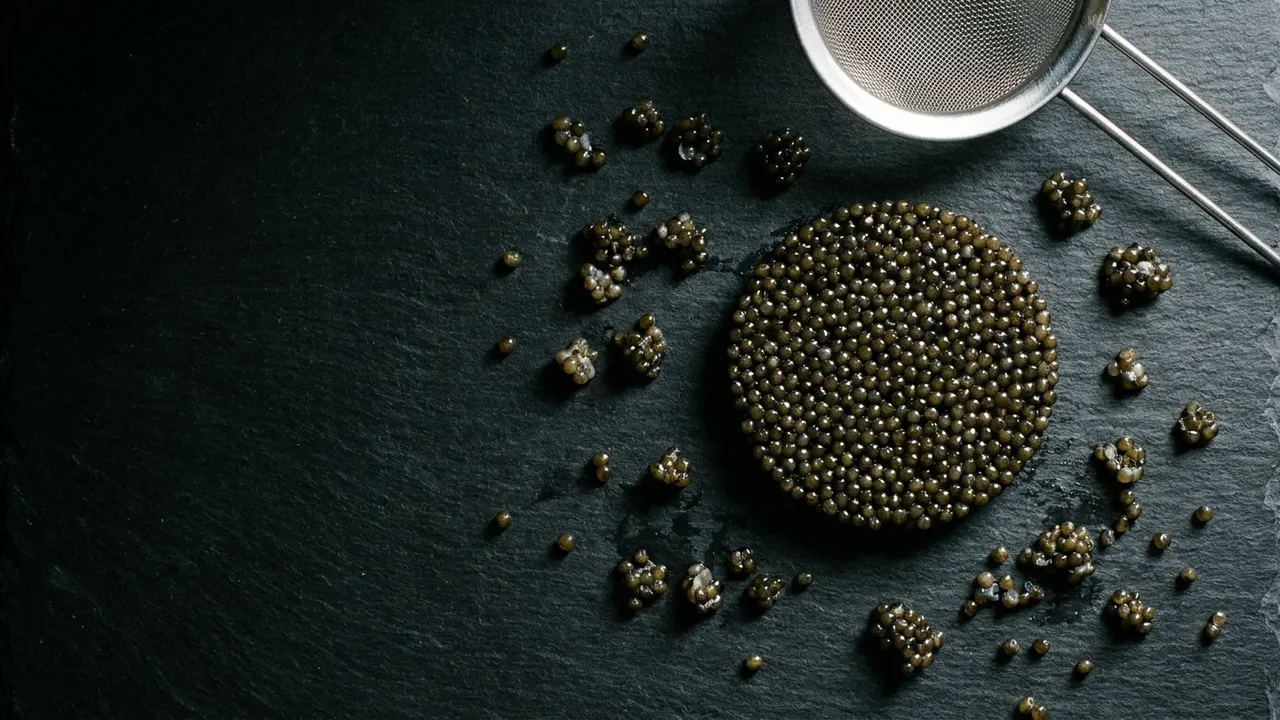
Caviar Grades Explained: What’s Real and What’s Marketing
There is no official caviar grading system in the United States. No agency defines the grades, no body audits them, and no law restricts what a producer may print on a tin. Four things about caviar are genuinely measurable: pearl diameter, salt content, whether the pearls are intact, and the species. Everything else on the label is a name someone chose.
Reviewed by Awers Inc. — 6 August 2026. Awers Inc. has cured, graded and packed its own caviar in Bellevue, Washington since 1995.
Is there an official caviar grading system?
No. Caviar grading in the United States is unregulated. There is no equivalent of the USDA beef grades and no independent assessor. No standard governs printing “Imperial” on a lid.
What is regulated is different. Species must be identified honestly, sturgeon shipments require CITES documentation, and food labelling law governs weight, allergens and ingredients. Quality language sits outside all of that.
So “what is the best grade of caviar” has no answer, because the question assumes a shared scale that does not exist. A Royal from one producer may be finer or coarser than a Classic from another. The grade tells you where a tin sits inside one company’s own range, and nothing more.
What actually gets graded
Four attributes are objective. Everything else is either a cure specification or a marketing name.
| Term | Real? | What it means |
|---|---|---|
| Pearl diameter, in mm | Objective | Physically measurable. 2.0 mm to 3.5 mm across the common species |
| Salt content, as a percentage | Objective | Measurable. Malossol is 3 to 5 percent |
| Intact vs damaged pearls | Objective | Visible. The basis of Grade 1 against Grade 2 |
| Species | Objective | Verifiable, and required on CITES paperwork |
| Malossol | Real, but not a grade | A cure specification |
| Grade 1 / Grade 2 | Real trade usage | Uniformity and integrity of the pearls |
| 000 / 00 / 0 | Partly real | A historic colour and size scale, producer-specific |
| Pressed (payusnaya) | Real, but a product | Made from damaged roe, not a quality tier |
| Royal, Imperial, Reserve, Select, Supreme | Marketing | Unregulated names, meaningful only within one range |
Grade 1 and Grade 2 caviar
Grade 1 caviar has uniform, intact, firm pearls of consistent colour. Grade 2 has less uniformity, weaker pearls, more variation in colour and a proportion of damaged eggs. This is the one grading distinction with consistent meaning across the trade.
Grade 2 is not spoiled or inferior roe. Grade 2 is roe that did not sort cleanly. Usually the eggs were taken slightly outside the ideal window, or the membrane separated poorly. It goes into jars, into pressed caviar, and into kitchens where the roe is an ingredient rather than the centre of the plate.
The distinction is worth knowing because it is the only place the word “grade” is doing real work. When a tin says Grade 1, it is describing the roe. When it says Imperial, it is describing the marketing.
Malossol is a cure, not a grade
Malossol is Russian for “little salt” and describes a cure of 3 to 5 percent salt. It is a processing specification, not a quality tier, and it appears on tins across every price point.
Low salt is a quality signal in one narrow sense. Salt preserves roe and masks flavour. A producer who can cure at 3 percent is working with fresher, better-handled eggs than one needing 8 percent. That correlation is real, but it makes malossol a proxy rather than a grade.
Every tin we pack is cured malossol with no preservatives. That is a statement about method, and we would not present it as a rank.
What 000, 00 and 0 mean
The 000 scale describes colour and size, with 000 the lightest and largest. The scale was used historically for Beluga. 000 denoted the palest grey large-pearled roe, 00 a mid grey and 0 a darker grey.
Two things limit its usefulness. The scale was always producer-specific rather than standardised. Beluga also cannot be imported into the United States, so few Americans will ever see a tin marked this way. See is Beluga caviar legal in the USA.
Some producers now apply the notation to other species. Where they do, it means whatever that producer decided it means.
Royal, Imperial, Reserve and Select
Royal, Imperial, Reserve and Select are marketing names. No regulation defines them, no body audits them, and they cannot be compared between suppliers.
What they usually signal, within a single producer’s range, is the age of the fish. Older sturgeon produce larger, paler, more expensive roe, so the escalating name usually tracks an escalating fish age.
- Classic — standard-age fish, the everyday tier
- Royal, Imperial, Reserve — older fish, larger pearls
- Golden — the rare amber roe of mature sturgeon, priced several times higher
- Select, Supreme, Premium — no consistent meaning at all
Read these as a producer telling you which of their tins they consider their best. That is useful information. It is not a comparison with anybody else.
How to judge caviar quality yourself
Ignore the grade name and check six things. Every one is observable without expertise.
- Appearance. Pearls should be distinct and separate, not a paste. You should be able to see individual eggs.
- Uniformity. Consistent size and colour across the tin suggests careful sorting.
- Sheen. Good roe is glossy rather than dull or matte.
- Liquid. A little clear separated liquid is normal. Cloudy liquid or a pool of it is not.
- The pop. Pearls should resist briefly, then release cleanly. Mushy is a fault; rubbery means over-processed.
- The finish. Clean and marine. A long oily or metallic aftertaste is a fault, not a style.
Ask two questions before buying. What is the pearl diameter in millimetres, and what is the salt percentage? A producer will answer both. A reseller reading from a website often cannot, and that tells you something on its own.
Does grade change the price?
Yes, sharply, and mostly because grade names track the age of the fish. A Golden Ossetra reaches $130 per ounce because the sturgeon that produced it lived far longer than one producing Classic roe at $30.
The relationship is real, but it does not travel between sellers. A well-made Classic from a careful producer will beat a Royal from a careless one, at half the money. Species and handling matter more than the tier name.
Our own line does not use escalating grade names. Ossetra is Ossetra and Kaluga Hybrid is Kaluga Hybrid, at $107.00 and $110.00 for a 100 gram tin.
Frequently asked questions
What are the grades of caviar? The grades that mean something are Grade 1 and Grade 2, describing whether the pearls are uniform and intact. Names such as Royal, Imperial and Reserve are producer marketing and have no standard definition.
What is the best grade of caviar? No grade is objectively best, because no standardised grading system exists in the United States. Judge a tin by species, pearl diameter, salt percentage and how it looks and tastes.
Is Grade 1 caviar better than Grade 2? Grade 1 has more uniform, intact pearls and is better for eating from the spoon. Grade 2 is not spoiled. It works well as an ingredient, in pressed caviar, or where the roe is not the centre of the dish.
What does malossol mean on a caviar tin? Malossol means “little salt” in Russian and describes a cure of 3 to 5 percent salt. It is a processing method, not a quality grade.
Is 000 the highest grade of caviar? In the historic Beluga scale, 000 denoted the lightest and largest pearls. The scale was never standardised across producers, and Beluga cannot be imported into the United States.
Are salmon caviar grades the same? No. Salmon roe uses its own trade conventions, often Grade 1 and Grade 2 by uniformity and firmness, and separate letter codes by producer. The sturgeon grade names do not transfer.
In summary
No official caviar grading system exists in the United States, and no agency audits the words on the tin. Grade 1 and Grade 2 describe whether the pearls are uniform and intact, and that distinction is real. Malossol describes a cure of 3 to 5 percent salt. The 000 scale is a producer-specific colour and size notation from the Beluga trade. Royal, Imperial, Reserve and Select are marketing names that rank tins inside one company’s range and mean nothing between companies. Judge caviar by species, pearl diameter, salt percentage and what you see in the tin.